Era Pickleball Indoor Courts: What to Expect
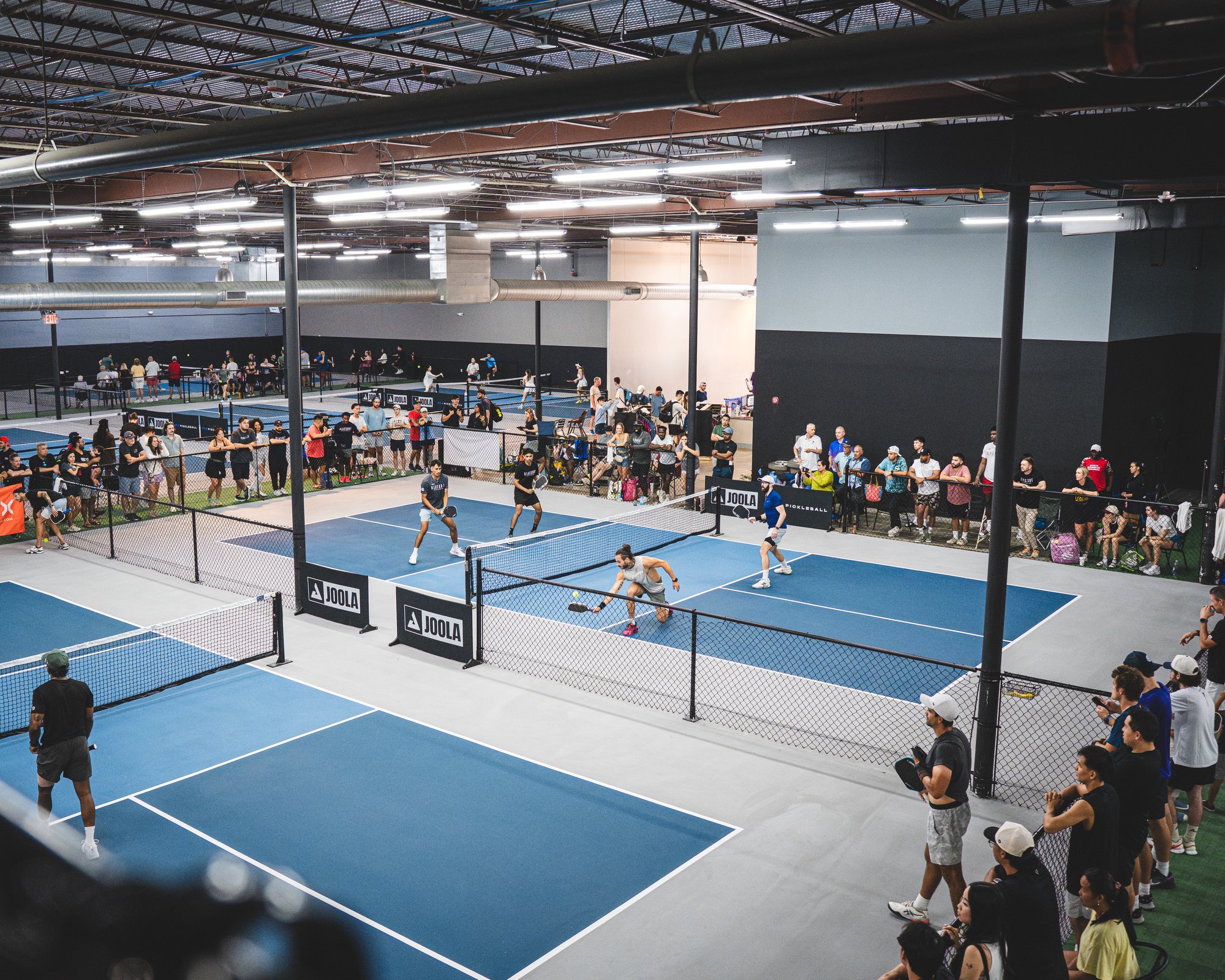
When I first walked into an Era Pickleball indoor court, the air smelled of rubber and fresh chalk, and the net tension hummed with the quiet intensity of a game about to unfold. Years of playing, coaching, and watching venues evolve have taught me that indoor pickleball spaces are not just places to smash a rally; they shape the rhythm of practice, the pace of a match, and even the way a player thinks about every shot. The Era Pickleball experience is built around more than polished floors and bright lighting. It is a deliberate design of space, sound, and flow that invites players—from curious beginners to seasoned veterans—to test limits without stepping outside the comfort of a controlled environment.
What follows is a grounded tour of what you can expect when you step into Era Pickleball indoor courts, drawn from real-world visits, conversations with staff, and a few hours on the court testing the facilities. If you are scouting venues for yourself, a team, or your family, you’ll find practical details, trade-offs, and a sense of the culture that tends to settle into Era spaces after the first few sessions.
Setting the stage: the building and the feel
Era Pickleball venues tend to be defined by a certain operational clarity. The moment you walk in, you notice durable materials, a straightforward color palette, and a layout that prioritizes sightlines and safety. The courts are usually arranged to maximize daylight or high-quality artificial light, with consistent ball bounce and even floor texture across all courts. Expect a climate that stays comfortable through most of the year, not too cold at the service line and not too warm near the baseline. The temperature matters because a few degrees can influence paddle control and shot selection, especially on those longer rallies that test the grip and wrist.
In terms of acoustics, indoor venues can feel alive in ways that outdoor courts cannot. The sound of a paddle meeting a ball carries differently when there are walls and ceilings to reflect it. A well-designed Era facility uses this to its advantage. You’ll hear a clear pop when a well-struck drive lands, a softer thud on a gentle dink, and enough ambient noise to make a match feel intimate rather than cavernous. The designers know that a good acoustic profile helps players time their footwork and anticipate the return more reliably.
Court surfaces and line quality
One practical detail that makes an early impression is the court surface. In most Era indoor courts, you’ll encounter a surface that offers a predictable bounce with minimal grip change as you move from one end of the court to the other. The texture is smooth enough to prevent drag on the footwork, but not so slick that a player loses traction during a late shift at the kitchen line. The lines should be crisp and bright, with paint that remains legible after months of play and frequent foot traffic. I’ve observed that consistent line color reduces hesitation during calls, which translates into smoother rallies and less disputing over whether a ball caught the line or barely clipped it.
If you are mindful of your footwork, you’ll notice that Era venues typically encourage a steady, low center of gravity. The floors are built to reduce ankle pronation and protect players during rapid changes of direction. Even when you step out for a cross-court dink, you feel the surface respond in a way that reinforces sound technique rather than encouraging reckless speed. That combination is one reason many players report down time between points feels shorter here, because the court affords clean mechanics rather than forcing momentum and missteps.
Facilities that support practice and development
An Era indoor court is not a single surface and net along with a couple of benches. It is a suite of features designed to support development at multiple levels. Expect a dedicated warm-up area with enough free space for dynamic footwork and quick transitions, a well-stocked supply of grip tape and replacement balls, and a small practice wall or self-feed stations where players can work on specific shots without waiting for a court. If you are coaching or bringing a junior, you’ll appreciate the emphasis on safety and progress tracking—the building often includes whiteboards or chalkboards in a common area where coaches can note drills or observed patterns from a session.
The equipment inventory matters as well. In Era venues I’ve visited, there is a workable blend of household-grade paddles and mid-range models that players can borrow for a session. The staff tends to know the difference between a wiffle-like practice paddle and a heavier, crisp-hit design that demands precise control. The aim is to keep beginners moving with a forgiving tool while giving advanced players a chance to test weight, balance, and grip in a real court setting.
For players who care about strategy, the layout and facility choices give a tangible advantage. You’ll see spacing that supports lane guidance for doubles plays and a rhythm that makes it easier to practice transitions from baseline to kitchen. In some venues, you’ll notice mirrored walls that allow players to study their footwork from a second perspective. In others, the walls are a touch more neutral, pushing you to rely on your own court sense. Either way, the setup is designed to help you internalize patterns—how to slip a return into the side alley, how to angle a third shot to the open court, or how to ride out a stubborn rally with patient defense.
Memberships, leagues, and programming: what the community looks like
Era Pickleball spaces often function as anchors for local communities. The membership model tends to be straightforward: a monthly or annual fee grants access during posted hours, with punch-card options for casual players who want to drop in without a long-term commitment. The membership structure often includes tiered levels, with higher tiers offering priority court reservations, access to premium times, guest passes, or discounted lessons and clinics. If you are balancing cost and access, ask about peak-hour surcharges or time-block guarantees. In practice, many players find that the value comes from reliable court availability during the evenings and weekends when the club buzzes with doubles leagues and clinics.
Leagues are a natural fit in indoor environments because the controlled space and regular cadence of play create a predictable schedule. Era spaces commonly host mixed doubles and men’s and women’s divisions across several skill levels. The real benefit lies in the continuity: players return weekly, they build routines, and they watch others improve in real time. You often see a mix of long-time club members and newer faces who join through a learn-to-play program. The culture leans toward friendly competition. The rules of engagement are straightforward—keep it respectful, call lines honestly, and support teammates whether you win or lose.
Coaching and lessons are typically woven into the package. Many Era venues offer beginner clinics to introduce fundamentals like grip, stance, paddle control, and the serve. For more advanced players, there are strategy sessions focusing on shot selection and court positioning. The best experiences come from instructors who blend technical instruction with live, low-pressure scrimmages. It helps to look for coaches who can translate mechanics into match-ready habits, not just drill-based repetition.
Anecdotes from the court: real-world experiences
I’ve watched players who arrive with a single goal in mind—improve their backhand slice—and leave with a broader toolbox. A friend of mine joined an Era club as a casual player and quickly found that the environment rewarded deliberate practice. He attended a weekly drill session that emphasized footwork patterns at the kitchen line. The coach insisted on keeping the paddle low and the feet light, then gradually layering in the dink, the drive, and the volley with a focus on pressure management. After six weeks, he noticed not just improved control, but better decision-making during rallies. He stopped chasing every ball with wild energy and started pacing his approach to the court more intentionally. That shift changed how he played in real matches, even when he went outdoors with friends.
Another story comes from a family that moved to a new city and found their weekend ritual in an Era indoor facility. The parents signed up for a family lesson, while the older kids joined a doubles league. The younger child learned to keep the paddle in front and focus on making a two-step rhythm across the baseline. The parents, who had played tennis for years, realized how different grip strength and wrist hinge can be in pickleball. They adapted quickly, and before long they were practicing together, which made the sport a shared habit rather than a solitary hobby. This kind of cross-pollination—tennis players translating their footwork, basketball players applying court awareness to the dink game—tends to happen faster in venues that invest in community-building.
From a coaching perspective, the indoor setting also helps when you want to implement a systematic progression. You can run a four-week plan that cycles through serve, return, transition, and point construction within a controlled space. The predictable lighting reduces eye fatigue during late-evening sessions, which is a subtle but real advantage. If you are teaching younger players, the indoor court’s consistency matters even more: fewer weather interruptions, fewer wind gusts, and a surface that remains stable through the session. You can measure progress more clearly by comparing a player’s shot selection and rally length from week to week.
The practical side of choosing Era
For many players, the decision to join an Era indoor facility comes down to a few practical evaluation points. First, consider location and access. A venue that is easy to reach with ample parking, good public transit options, and clear signage reduces friction and keeps participation high. Indoor spaces that are easy to navigate—clear check-in processes, visible court numbers, and straightforward equipment stations—lower the barrier to entry for new players and families.
Next, evaluate the open-court availability. If you rely on booking courts during peak times, you want a system that provides reliable reservation windows and a reasonable chance of getting a court when you need it. Some Era facilities offer flexible booking that allows you to reserve a block of time or to join a waitlist for a likely cancellation. The switch from a casual pick-up game to a scheduled league can be a meaningful step, so ask about how easy it is to scale your participation as your comfort and skill grow.
Consider the quality of the coaching and the variety of programming. A well-rounded Era venue will provide multiple paths to improvement: beginner clinics for new players, strategy sessions to refine doubles play, and specialty clinics that emphasize defense, shot control, or serving accuracy. If your indoor pickleball courts aim is to level up quickly, look for programs that pair on-court practice with video analysis or biomechanical feedback, even if the latter is offered through partner apps rather than at the facility itself.
The social glue matters as well. In my experience, the strongest indoor pickleball environments are those that foster a sense of belonging. It’s not just about the game; it’s about the conversations you have in line for snacks, the casual drills you do after a match, and the way the community greets a newcomer who might feel a little awkward at first. You’ll learn the best plays over coffee, not just on the court. A venue that prioritizes community events, social mixers, and kid-friendly sessions tends to build a durable population of players who return week after week.
Two practical considerations you will want to verify
-
Reservation and check-in flow. A smooth process reduces time wasted in the lobby and keeps your energy focused on the game. When a venue has a digital sign-in, a simple court map, and a friendly front desk team, it becomes easy to settle into a session quickly. If you’re bringing a group, you’ll appreciate a staff that can help coordinate a multi-court booking, manage equipment needs, and handle any schedule shifts that arise.
-
Court maintenance and ball quality. Indoor environments can wear a court faster when there is heavy daily use. Look for consistent ball rotation, a clear line of sight between courts, and proactive maintenance notes from staff. If a facility rotates balls frequently and runs quick repairs on nets and court edges, it signals attention to detail that translates into more predictable play.
A note on outdoor versus indoor in the Era ecosystem
Era Pickleball has earned a reputation for indoor courts that support a focused, structured playing experience. That does not diminish the value of outdoor courts, which offer a different flavor of play—more wind variables, hotter sun at certain times of day, and a broader range of surface textures depending on location. Outdoor courts are excellent for practicing the hardier skills—reading wind on a serve, dialing in shot depth when you have to account for sun glare, or managing heat-induced fatigue. But indoor venues provide a controlled environment that helps you lock in basic mechanics, refine your footwork, and develop a steady rhythm without weather as a variable.
A good rule of thumb is to treat indoor sessions as the foundation for your technique, and outdoor play as the arena for applying that technique under more dynamic conditions. If you can build a routine that alternates between indoor practice and outdoor play, you’ll likely progress faster and maintain consistency across different conditions.
Lessons learned for players who want to maximize their Era experience
-
Be deliberate about your warm-up. Spend extra minutes on shoulder activation, hip mobility, and ankle stability. A quick, field-tested warm-up can prevent common injuries and set you up for a sharper identity at the kitchen line.
-
Use the dink as a test, not a habit. Early in a session, focus on the precision of your dink rather than the quantity. The dink, when landed consistently, becomes a powerful weapon. If your dink pressure is the same from the left and right side of the net, you gain confidence to push farther into the court and shorten your opponents’ options.
-
Watch the contact point. The moment of impact informs paddle control and shot selection more than you might expect. A late contact with a snap wrist can produce unpredictable trajectory, while an early contact often yields a more stable drop. Track where you feel the ball on your paddle and adjust your grip and stance accordingly.
-
Prioritize your non-dominant hand. A quick stop for a quick switch of grip or a tiny adjustment of stance can be the difference between a lose and a win. Keep your non-dominant hand visible to help balance and balance the paddle when you reach for a tricky shot.
-
Treat clinics as apprenticeship opportunities. Even if you have a strong game, a well-structured clinic can reveal subtle habits that slow your progress. It is often the smallest adjustments—grip pressure, elbow alignment, or knee bend—that unlock more efficient rallies.
A solid take: what to expect priors and after
If you are evaluating Era Pickleball indoor courts, expect more than a place to play. Expect a space that invites you to train more efficiently, to learn with intention, and to connect with a community that shares a passion for the sport. The environment is engineered to support consistent practice, measured improvement, and the social momentum that keeps players returning.
The practical realities of a typical visit include clear check-in procedures, reliable court reservations, and a staff that can guide you through the facility’s offerings. The courts will likely be well-lit and uniform, with a surface that responds predictably to drive and dink. You will encounter dedicated areas for warm-ups, drills, and small group activities, plus programs that extend from beginner to advanced levels. And you will feel the culture—the quiet, steady energy that comes from players who know that improvement is the result of purposeful practice and patient repetition.
If you walk away with one impression, let it be this: Era indoor courts are designed to translate the nuance of the game into everyday training. The best players understand this, using the controlled environment to sculpt technique, test strategy, and build the stamina needed to sustain high-level doubles play. The rest of the journey—your learning curve, your personal improvements, your social connections—happens within the walls that keep the game humming from morning until night.
What to do next when you are ready to explore
-
Locate the nearest Era Pickleball indoor court. Start with a quick search and map the best routes to the facility from your home or workplace. If you need a satellite view to assess parking, do that early so you can plan without distraction.
-
Check the schedule for the time you prefer. Look for beginner clinics or player-led scrimmage nights to get a sense of the community and tempo. If you’re bringing a group, determine whether the club can accommodate multi-court bookings or private coaching sessions.
-
Talk to staff about memberships and programs. Ask about the difference between monthly and annual options, what amenities are included at each level, and whether there are guest passes or trial days you can try before committing.
-
Attend a trial session if possible. The firsthand feel of an Era environment is the best way to judge whether the court, the lighting, and the crowd align with your expectations. If you have a game schedule, bring it along so staff can advise you on suitable practice blocks.
-
Observe a match or two. Watch doubles teams and notice how they position themselves, how they react to shots, and how communication flows. You’ll quickly pick up cues that do not always appear in drills but matter in real play.
The heart of the experience
At the end of a long practice, what remains real is the sense that you have become better at a demanding game because the space around you supported that growth. Era Pickleball indoor courts embody a practical philosophy: quality space, reliable equipment, a structured path for skill advancement, and a community that can turn a casual afternoon into a weekend ritual. For many players, the value lies not only in winning points but in the daily discipline of showing up, testing a shot, and learning from the feedback that comes with every rally.
If you are in the market for a new pickleball home base, Era offers something more than a place to play. It offers a framework for learning, a social fabric that brings players together, and a physical environment where the game can be chased with calm concentration rather than wind or sun as the wild card. The result is a sport that feels accessible to beginners and deeply satisfying for experienced players, because the venue itself becomes a partner in the journey.
Two quick takeaways to keep in mind as you plan your next session
-
The indoor environment matters as much as the players. A well designed facility can accelerate learning, reduce injury risk, and foster the kind of steady improvement that shows up in your game within weeks.
-
The community is the engine. The best Era experiences come from a solid network of players and coaches who show up consistently, share tips, and push each other toward better play without bruising confidence along the way.
If you want to find a court near you or learn more about the specific offerings at a particular Era Pickleball indoor facility, a direct visit or a call to the front desk is often the fastest route. You can gauge court quality, verify equipment standards, and ask questions about the mix of open play, scheduled leagues, and instructional programs. The right club will feel inviting from the moment you step inside, and the feeling tends to grow stronger as you get your hands on a paddle, feel the bounce, and realize that this space is built for the kind of progress you are seeking.
As you weigh options, hold onto this: the best indoor pickleball venues are those that treat practice as an end in itself. They encourage players to refine technique with care, to test strategy with confidence, and to build a sense of belonging that makes each session a reason to return. Era Pickleball indoor courts aim to deliver that blend—a space where the court is steady, the lighting is clear, the staff is helpful, and the game you love becomes the craft you nurture.